“How to Sleep During the Day: A Shift Worker’s Guide That Actually Works”
How to Sleep During the Day: A Shift Worker’s Guide That Actually Works
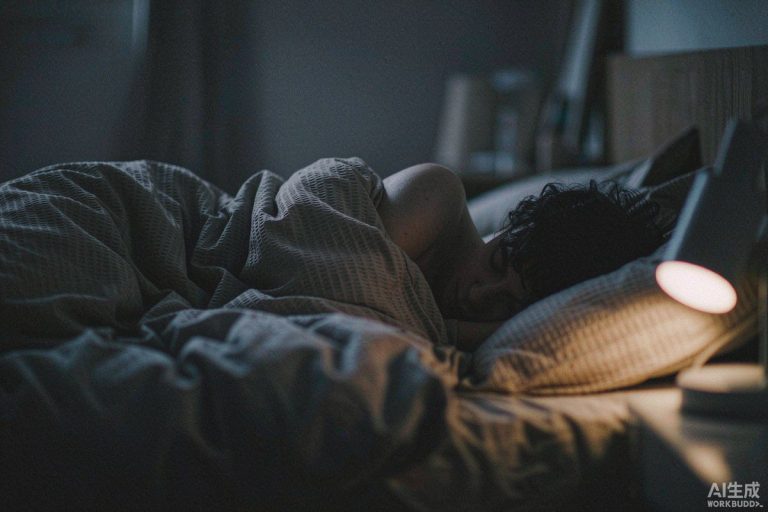
Your body does not care that your shift starts at 7pm. It has spent millions of years of evolutionary precedent deciding that dark means sleep and light means wake, and no schedule change overrides that in a week. Roughly one in five workers now works outside standard daytime hours, and the ones who sleep best are not the ones with the most willpower — they are the ones who treated daytime sleep as an engineering problem rather than a discipline problem.
This guide is the system: control the light, anchor the window, time the caffeine, and know when the problem is bigger than shift work.
Why daytime sleep feels different (and why that’s not your fault)
Two biological forces fight you when you sleep against the clock:
Your circadian rhythm runs on light, not intention. The suprachiasmatic nucleus — a small cluster of cells behind your eyes — uses light exposure to set your body’s clock. Morning light is the strongest “wake up” signal your biology has. When you crawl into bed at 8am after a night shift, your clock is receiving exactly the signal it uses to promote alertness.
Your core body temperature has a daily curve. Body temperature drops as sleep approaches and rises before waking. The deepest point of that curve typically lands about two hours before your habitual wake time. For a day sleeper, that drop arrives in the afternoon — hours before your desired bedtime — which is why the classic complaint is “I fall asleep fine but wake up two hours later and can’t get back.”
None of this means you can’t sleep during the day. It means you have to engineer the environment so the two signals (light and temperature) stop fighting you.
The four problems you’re actually solving
Every piece of advice in this article maps to one of four problems. If you only remember the framework, remember this:
- Light — daytime sleep happens in daylight. Light is your number one enemy and your number one tool.
- Noise — the world is awake when you sleep: traffic, lawnmowers, deliveries, family.
- Consistency — rotating and irregular shifts destroy the anchoring that makes sleep easy.
- Recovery pressure — after a night shift, you’re not just tired; you’re sleep-pressured at the wrong circadian phase, which produces short, broken sleep.
Solutions that don’t address these four are decoration.
Build the room first
### Blackout is not optional
For daytime sleep, blackout curtains are the highest-leverage purchase you can make — not earplugs, not supplements, not a better mattress. Total darkness does two things: it removes the light signal telling your brain to wake, and it protects the second half of your sleep, when light intrusion is most likely to wake you.
Install curtains that cover the full window frame (light leaks around edges defeat the purpose), and add a sleep mask as a backup — a good mask handles the light your curtains can’t. Our guide to blackout curtains for shift workers covers the specs that matter.
One trap: if you can’t fully darken the room, you’ll adapt to a dim room but not a bright one. Aim for “you can’t see your hand at arm’s length,” not “it’s a bit dimmer.”
### Temperature: aim lower than feels natural
Core body temperature has to drop for sleep to initiate and stay stable. Daytime bedrooms are usually warmer than nighttime ones — sunlight through glass, afternoon heat, no nighttime cool-down to exploit. Set the room to roughly 65°F (18°C) and treat that as the default, not the exception; the full reasoning is in our bedroom temperature guide.
If you share the room with someone who’s awake, this becomes a negotiation. A fan pointed at the bed does double duty: cooling and masking noise.
### Noise: mask, don’t just block
Earplugs block sound; a white noise machine masks it. Shift workers usually need both, because daytime noise is unpredictable — a leaf blower at 2pm defeats any passive solution. A cheap fan or a dedicated white noise machine (we’ve compared the options here) creates a steady acoustic floor that makes intermittent noise less likely to cross the arousal threshold. Pair with earplugs rated for sleep, not the foam ones from the hardware store, which press uncomfortably when your head is on a pillow.
Anchor your sleep window
The workers who sleep best after night shifts share one habit: they protect a consistent core window, usually 8am to 3pm or similar, even on days off. The body clock can partially shift to accommodate a fixed window — it just needs the window to actually be fixed.
Practical rules that come out of that:
- Pick your window and defend it for at least a week. Phone off, door sign up, family briefed. Rotating workers who switch windows every few days never get the anchoring benefit; they live in permanent jet lag.
- Sleep in one block if you can. Split sleep (main block plus a nap before the next shift) works, but a 5-hour main block plus a 2-hour nap beats two 3.5-hour blocks for most people.
- On days off, keep the first half of your window. Sleeping until 2pm on a day off feels restorative and is partly true, but it blurs the anchor. A compromise: keep the same wake time as workdays for the first two days off, then allow one longer sleep at the end of the block.
Caffeine: the tool, not the crutch
Caffeine is the most-studied performance drug in the world, and shift workers routinely use it wrong — either too late in the shift or not at all in the first half. Two rules cover 90% of the value:
Use caffeine strategically early in the shift. A dose at the start of your shift improves alertness when you need it; the same dose at hour 9 mostly delays your sleep without helping your performance.
Stop caffeine with enough runway. Caffeine’s half-life is roughly 5–6 hours, but the sleep-disrupting effect extends longer than the “buzz.” As a working rule, your last caffeine should be at least 6 hours before you plan to sleep — for an 8am bedtime, that’s a 2am cutoff. Our caffeine cutoff calculator does the arithmetic for your schedule, and the deeper mechanism is in how caffeine affects sleep.
The trap is energy drinks: caffeine plus sugar plus the habit of sipping all night. Dose deliberately at known times instead.
Napping around the shift
Two nap windows do most of the work:
- A nap before the shift (roughly 90 minutes, or 20 minutes if you just need alertness) banks sleep before the demanding hours. A full 90-minute cycle avoids waking from deep sleep, which produces grogginess.
- A nap mid-shift, when alertness dips, should be short — 20 minutes max, timed so you wake at least 4 hours before the drive home.
And about the drive home: drowsy driving after a night shift is one of the genuine hazards of this schedule. If you’re fighting sleep at the wheel, a 20-minute coffee nap (caffeine immediately before a 20-minute nap — the caffeine kicks in as you wake) is a legitimate emergency tool, not a life hack.
Light strategy: the other half of the equation
Light management works in both directions:
Get bright light early in your shift. Bright light during the first half of a night shift is one of the best-supported interventions for staying alert. If your workplace is dim, a light therapy lamp at your station is worth considering (our winter light therapy guide covers the specs).
Avoid morning light on the way home. This is the mistake almost every new night worker makes. Morning sunlight after your shift shifts your clock in exactly the wrong direction — toward daytime wakefulness — and wrecks the sleep you were about to get. Sunglasses on the drive or walk home, even on overcast days, is not vanity; it’s circadian hygiene. Get your light exposure later in the day instead, after your main sleep block, to consolidate the new rhythm.
Supplements: a narrow, honest case
Melatonin has decent evidence as a clock-shifter, not as a sedative — small doses (0.5–3mg) taken at the right time can help day sleepers fall asleep faster and shift the rhythm. Taken at the wrong time it can make things worse, which is why “melatonin didn’t work for me” is such a common report. The evidence and the dosing traps are covered in our melatonin guide, and the broader picture of what does and doesn’t work is in do sleep supplements actually work.
What does not have good evidence: alcohol as a sleep aid (it fragments the second half of sleep), heavy meals right before the window, and most “sleep support” blends marketed to night workers.
Red flags: when it’s not just the schedule
Shift work makes sleep hard. It does not cause everything. See a doctor rather than optimizing further if you notice:
- Loud snoring, gasping, or witnessed pauses in breathing — reported by a partner or roommate, this is the single strongest sign of sleep apnea, and untreated apnea does not respond to any schedule hack. Shift workers are at higher risk, partly because disrupted sleep worsens it.
- Sleepiness that persists despite an adequate, protected window — if you’re getting 7+ hours in a dark, quiet room and still fighting sleep during the day, that’s a medical evaluation, not a discipline problem.
- Falling asleep at the wheel, at work, or mid-conversation — treat this as urgent, not as a bad week.
- Waking at 3am night after night on a day schedule — if you’ve moved back to nights and still wake early, our guide to 3am wake-ups covers the common non-schedule causes.
One more honest point: some people never adapt to night work, and the adaptation gap is largely genetic. If you’ve run this playbook for a month and it’s still destroying your health, the most effective intervention may be a schedule change — which is a career conversation, not a sleep conversation. We know that’s not actionable for everyone, but it belongs on the list of options rather than being pretended away.
How we assessed this
The recommendations above are drawn from the shift-work and circadian literature — intervention studies on bright light exposure, timed light avoidance, strategic caffeine, and napping protocols, plus clinical guidance on shift work sleep disorder. We prioritized strategies with replicated evidence over forum folklore, and where the evidence is mixed (melatonin timing, split sleep) we said so rather than picking a side.
We weighed every recommendation against a practical constraint: it has to survive contact with a real life — shared housing, kids, second jobs, and rotating schedules that make “consistency” expensive. That’s why this guide is a system of trade-offs rather than a checklist.
We have not conducted our own sleep-lab testing on shift workers, and we cannot verify how any individual’s clock will respond — adaptation to night work varies enormously between people. This guide is general health information, not medical advice; persistent sleep problems deserve a clinician, and any breathing-related red flags above should be evaluated promptly.
FAQ
Is it better to sleep right after a night shift or stay up until a normal bedtime? Sleep immediately after the shift, in a dark room, is the stronger default — you’re sleep-pressured, and delaying until a normal bedtime after a night shift means sleeping at the worst circadian phase. The exception is a short rotating shift ending in the early morning, where a short nap plus a main afternoon block can work.
How many hours do shift workers actually need? Most adults need 7–9 hours; shift work doesn’t change the requirement, only the difficulty of meeting it. How much deep sleep you need covers the structure question, and calculating sleep debt helps you track whether a rotating schedule is quietly accumulating a deficit.
Will my body ever fully adapt to nights? Partially. Core body temperature and cortisol can shift with a consistent window, but light exposure at home and on days off pulls the clock back. Aim for a workable compromise — consistent enough to sleep, flexible enough to live — not full conversion.
Do blackout curtains really make that much difference? They are the single highest-impact purchase for day sleepers. Light is the strongest signal your clock receives, and a single leaky curtain edge can wake you in the second half of your window when your sleep is lightest.
Is melatonin safe to use long term? For healthy adults, short- and medium-term use at low doses is considered safe, and it’s one of the more studied supplements. Long-term data is thinner, and it interacts with some medications — which is exactly the conversation to have with a doctor rather than with a search engine.