Best Sleep Teas (2026): What Is Actually in the Cup
A bedtime tea is the cheapest sleep intervention on the shelf and the one with the most forgiving failure mode: if it does nothing, you have had a warm drink and a few quiet minutes, which is itself not nothing. But the blends are not equivalent, and the difference between a tea that might work and one that cannot is usually visible on the ingredient list.
The two layers of a bedtime tea
There are two things happening when a sleep tea seems to work, and separating them matters for choosing one.
The ritual layer. A warm, caffeine-free drink consumed at the same time every night is a behavioural cue. It creates a predictable transition, warms the body slightly (which then dilates peripheral vessels and drops core temperature — a genuine sleep-onset signal), and removes you from a screen. This layer works regardless of the herb. It is also why the tea you believe in often outperforms the one with better evidence.
The pharmacological layer. A small number of herbs have controlled trials behind them. The effect sizes are modest — smaller than melatonin, much smaller than a sedative — and the trials are often small and industry-funded. But they are not zero.
Most commercial blends sell the second layer and deliver the first. That is fine. It is only a problem if you are paying premium prices for a named extract that appears at a homeopathic dose in a 20-herb blend.
The ingredients worth knowing
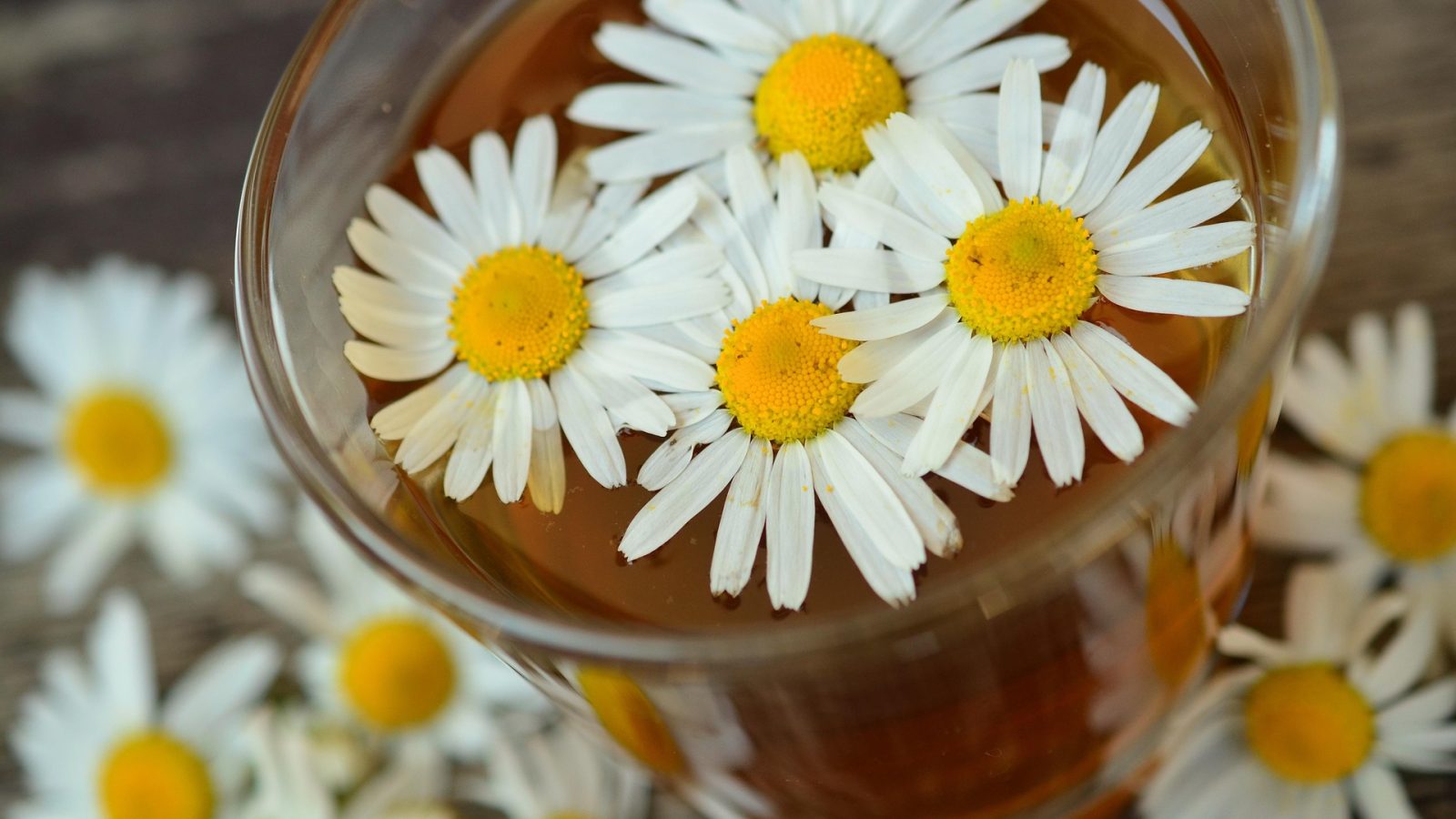
Chamomile (Matricaria chamomilla). The most studied bedtime herb. Trials suggest small improvements in sleep quality, and it has a long safety record. The compound usually cited is apigenin. Effective dose in trials is typically 1 to 2 grams of dried flower per cup, which is more than a single tea bag usually contains — a standard bag is about 1 g, and blends often use less. Chamomile is also a mild allergen for people sensitive to the daisy family.
Valerian (Valeriana officinalis). The strongest evidence of the common herbs, though still mixed. Trials have used 300 to 600 mg of dried root extract, and results are inconsistent — some show benefit for sleep latency, others show none. Valerian smells distinctly like old socks, which is why blends bury it under peppermint. It also has a paradoxical effect in a minority of people: it makes them alert. It also takes one to two weeks of nightly use to show anything.
Lemon balm (Melissa officinalis). Often combined with valerian in trials, where the combination has shown benefit in restlessness. Alone, evidence is thinner. Pleasant flavour, very safe.
Passionflower (Passiflora incarnata). Small trials in healthy adults and in people tapering benzodiazepines. Reasonable safety, mild effect.
Lavender (Lavandula angustifolia). Interesting because the evidence is stronger for inhaled lavender than for drinking it. Oral lavender oil preparations have some trial support in anxiety. As a tea ingredient it is mostly aromatic — pleasant, unlikely to hurt.
Others you will see: lemon verbena, hawthorn, hops (the traditional bitter in beer, mildly sedative), catnip, tulsi/holy basil, and L-theanine (an amino acid, not an herb — 200 mg is the dose used in trials, far more than a tea bag provides).
What to avoid: anything with St John’s wort (interacts with many drugs, including hormonal contraceptives and antidepressants), kava (liver risk, and not legal everywhere), and blends that list “proprietary sleep complex” without quantities. Also check for senna or other laxative herbs — some “detox” blends contain them and they will wake you at 4 a.m. for the wrong reason.
Caffeine, hiding in plain sight
The most common reason a bedtime tea does not work is that it is not caffeine-free.
- Black, green, oolong, and white tea all contain caffeine — roughly 25 to 50 mg per cup.
- “Decaf” is not zero. It is typically 2 to 5 mg.
- Matcha and powdered teas deliver the whole leaf, so the caffeine is higher.
- Chocolate and cacao blends contain theobromine, which is milder than caffeine but still a stimulant.
If you are sensitive, cut caffeine after early afternoon rather than relying on a bedtime tea to counteract it. The half-life of caffeine is about 5 to 6 hours, and longer in some people — a 3 p.m. coffee still has a quarter of its caffeine in your system at 3 a.m.
Steeping, which determines the dose
Herbal teas need different conditions from tea-leaf tea, and the instructions on the box are often wrong.
- Water temperature: 95–100 °C (just off the boil). Boiling water extracts the volatile oils and polysaccharides that carry the flavour and most of the actives.
- Time: 5 to 10 minutes, covered. Covering matters — the active compounds in chamomile and valerian are volatile, and an open cup loses them with the steam.
- Quantity: one tea bag is usually 1 to 2 g. If you want to match the trial dose, use two bags.
- Do not add milk to herbal blends containing tannins or saponins — it binds some of them. It does not matter much for chamomile, but it does for valerian.
What to look for
| Feature | Target | Why |
|---|---|---|
| Caffeine | 0 mg, stated | Check the actual leaf list, not the name |
| Named ingredients | Each herb listed with its Latin name | Generic “sleep blend” hides dose and substitution |
| Quantities | At least approximate gram amounts | “Proprietary blend” tells you nothing |
| Tea bag weight | 1.5–2 g, or loose leaf | A 1 g bag of a 6-herb blend is mostly dust |
| Single-herb options | Available | Lets you find what works for you |
| Packaging | Individually wrapped, or sealed tin | Volatile oils oxidise once opened |
| Certification | Organic if you care about pesticide residue | Herbs are not washed before drying |
| Sweetener | None added | Sugar near bedtime is not helpful |
Buying single-herb teas and blending them yourself is the most reliable approach if you want to know what is working. It also lets you dose properly: two chamomile bags is a much closer match to the trial than one tablespoon of a six-herb blend.
The temperature effect, which is real
There is a physiological mechanism worth knowing about, because it explains why the tea helps even when the herb does not.
Sleep onset is preceded by a drop in core temperature of about 0.5 °C, driven by vasodilation in the hands and feet. A warm drink in the 30 to 60 minutes before bed increases peripheral blood flow and accelerates that drop. The effect is small but measurable, and it is the same mechanism that makes a warm bath helpful — the bath works through cooling afterwards, not through the heat itself.
So: drink the tea 30 to 60 minutes before bed, not in bed. The timing is the active ingredient.
FAQ
Do sleep teas actually work? The ritual and the temperature effect are reliable. The herb effect is small and best supported for chamomile and valerian, at doses higher than most tea bags deliver.
Can I drink too much? Herbal teas in normal amounts are safe. Very large volumes mean nocturia, which defeats the purpose — one or two cups, finishing an hour before bed.
Is valerian safe long-term? It has a reasonable safety record, but there is no strong reason to take it indefinitely. If it helps, use it for a defined period and reassess.
Will it interact with my medication? Some herbs do — St John’s wort notably, and valerian can potentiate sedatives. Chamomile and lemon balm are lower risk. If you take anything sedating, check before adding valerian.
What if tea is not enough? If you are lying awake for more than 30 minutes most nights, the issue is more likely behavioural than herbal. Our guide to whether sleep supplements work reviews the trial evidence, and the magnesium guide covers the supplement route with more realistic expectations.