Best Mattresses for Back Pain in 2026
“Firm mattress for back pain” is the most repeated piece of advice in sleep retail, and it is only half right. A mattress that is too soft lets your pelvis sink below your shoulders, which arches the lower back all night. A mattress that is too firm pushes your shoulder and hip up, which flattens the lumbar curve and puts pressure exactly where you do not want it. Both end with you stiff at 6 a.m.
What actually helps is a mattress with enough surface give to let the shoulder and hip sink in, sitting on a support core stiff enough to stop the hips dropping. That combination has a name — medium-firm — but the label is applied so loosely that it tells you almost nothing. The picks below are the ones where the construction backs up the claim.
If your pain is concentrated in the neck rather than the lower back, start with our pillow picks for neck pain instead. Pillow loft fixes more morning neck pain than any mattress will.
Our picks at a glance
| Mattress | Type | Firmness | Best for | Price band |
|---|---|---|---|---|
| Saatva Classic | Innerspring hybrid | Medium-firm (Luxury Firm) | Most back sleepers, hot sleepers, couples | $$$ |
| Sleep Number 360 c2 | Adjustable air | Adjustable both sides | Couples who disagree on firmness | $$$$ |
| Leesa Sapira Hybrid | Hybrid | Medium | Side sleepers with lower back pain | $$$ |
| Brooklyn Bedding Signature | Hybrid | Medium-firm | Budget buyers, heavier sleepers | $$ |
| Tempur-Pedic ProAdapt Medium | All foam | Medium | Back sleepers under 200 lb who want pressure relief | $$$$ |
Best overall: Saatva Classic
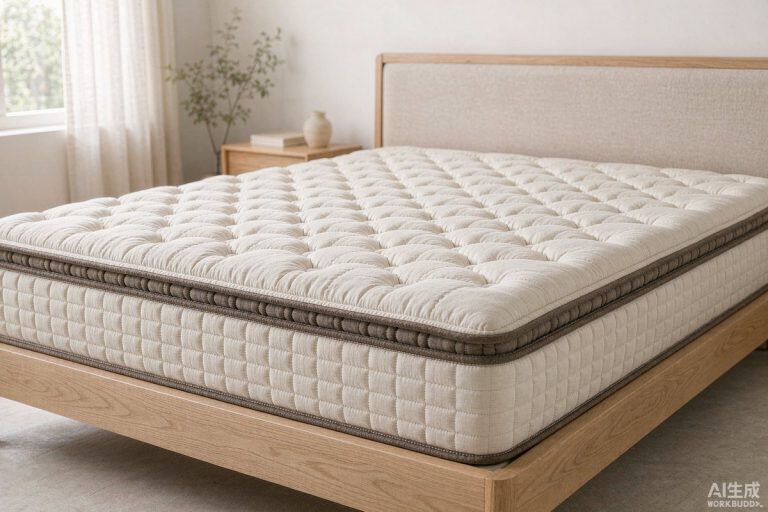
The Classic is a coil-on-coil mattress: a support coil unit under a pocketed micro-coil layer, with a thin foam comfort layer on top. That structure is why it works for backs. The coils give you a firm, continuous surface that keeps the hips from dropping, while the micro-coil layer lets the shoulder sink far enough that you are not fighting the mattress to get comfortable.
Two things to know before buying. First, order Luxury Firm, not Plush — Plush is genuinely soft, and for a back sleeper over about 170 lb it will let the hips sink. Second, Saatva is a “bedroom delivery” company: they will set it up and take the old one, which matters if you are buying because you cannot move a mattress yourself.
The weakness is motion transfer. Coils pass movement; if your partner is a light sleeper who wakes when you turn over, this is not the mattress for you.
Best if you and your partner disagree: Sleep Number 360 c2
Back pain advice assumes one sleeper with one spine. If you share a bed with someone who wants soft and you need firm, an adjustable air mattress solves the argument in a way no single-firmness mattress can. Each side inflates independently, and the setting is adjustable by night — which matters, because back pain is not constant.
Air mattresses have a real drawback: the edge is soft, and the surface has a slightly “floating” feel that some people never get used to. Buy from a Sleep Number store if you can, so you can lie on one for twenty minutes before committing to the price.
Best for side sleepers with lower back pain: Leesa Sapira Hybrid
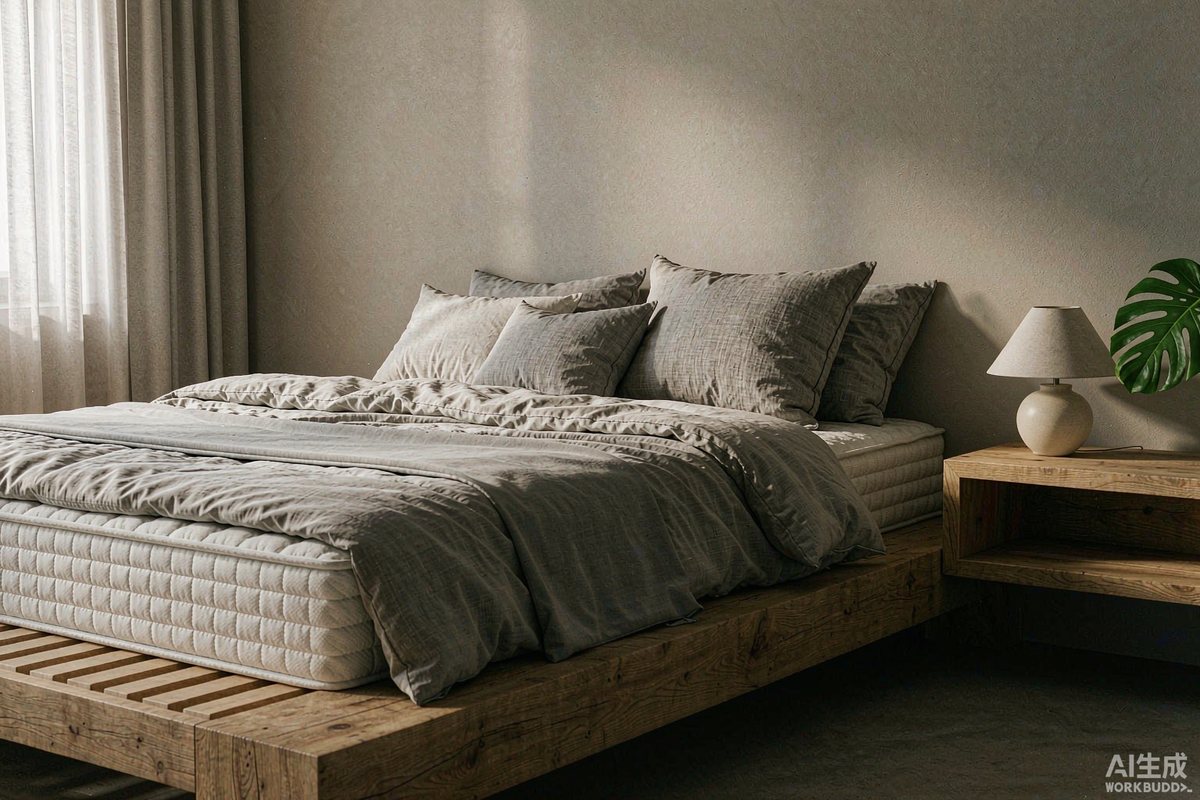
Side sleepers have the hardest geometry problem. The shoulder needs to sink, the waist needs to be held up, and those two requirements fight each other. The Sapira Hybrid resolves it with a medium foam top over pocketed coils — the shoulder compresses the foam, the coils under the waist hold their height.
It is not the coolest mattress on this list, but it is cooler than an all-foam bed of the same firmness. If you overheat easily, our guide to memory foam versus latex explains why that is a materials question, not a firmness one.
Best budget option: Brooklyn Bedding Signature
You can spend $600 or $3,000 and get a mattress that holds your spine neutral. The Signature is the strongest argument for the lower number: a hybrid with a medium-firm option, sold at a price that leaves room for a decent pillow and an adjustable base later.
The compromise is longevity. The foams are less dense than the ones in a Saatva or Tempur-Pedic, so a heavier sleeper should expect a shorter useful life — roughly six to eight years rather than ten. At this price, that is a reasonable trade.
Best for pressure relief: Tempur-Pedic ProAdapt Medium
If your back pain comes with hip or shoulder pressure — the kind where you wake up and have to change position because the contact points ache — memory foam does something coils cannot. It distributes load across the whole contact area instead of concentrating it on the high points.
The cost is heat and motion. Memory foam sleeps warm, and the ProAdapt is heavy and hard to move. It is also the one mattress on this list where a heavier sleeper should think carefully: above roughly 230 lb, most medium foams bottom out, and when they do, the support disappears and the mattress feels like a hammock.
What actually matters when you have a bad back
Spine neutrality beats firmness. Lie on your side on the mattress in a store, or on your own bed for a week, and have someone look at your spine from behind. It should be a straight line from the base of your neck to your tailbone — not a sag, not a bridge.
Your pillow changes the answer. A medium-firm mattress with a pillow that is an inch too tall will still leave you with a stiff neck and a sore mid-back. Fix both, or you will blame the mattress for the pillow’s mistake.
Weight changes everything. The same mattress that is medium-firm for a 140 lb sleeper is soft for a 240 lb sleeper. If you are heavier than average, size up in firmness. If you are lighter, size down.
Ignore “orthopedic” as a marketing word. No mattress is a medical device, and none is approved to treat a condition. The word is unregulated.
When to see a clinician instead of buying a mattress
A mattress can improve how you sleep. It cannot fix a disc, a fracture, or an inflammatory condition. See a doctor rather than shopping if you have:
- Pain that radiates down a leg, or numbness or weakness in a foot
- Back pain with fever, or with loss of bladder or bowel control
- Pain that began after a fall or accident
- Morning stiffness lasting more than an hour, most days
- Pain that is worse at rest and better with movement
These are signals that need assessment, not a firmer bed. See our medical disclaimer for the full scope of what this site does and does not cover.
FAQ
Is a firm mattress always better for back pain? No. Very firm mattresses increase pressure at the shoulder and hip and flatten the lumbar curve. Medium-firm, with a support core that keeps the hips level, is the better target for most people.
How long should I give a new mattress before deciding? Thirty days minimum, and be aware that most foams soften slightly in the first two weeks. If you are still waking with pain at day 45, the mattress is wrong for you — use the return window rather than hoping it breaks in further.
Do I need an adjustable base? If you have reflux, swelling in the legs, or pain that is better when your knees are raised, yes — a base changes your sleeping angle in a way no mattress can. If none of those apply, it is optional.
Should I put a topper on a firm mattress instead of replacing it? It can work, but only if the mattress underneath is still supportive. A topper softens the surface; it cannot restore a core that has already collapsed. If your mattress sags in the middle, a topper will sag with it.