Best Sleep Trackers in 2026
Most people who buy a sleep tracker stop wearing it within three months. Not because the hardware fails, but because a nightly score does not tell you what to do differently. The trackers worth buying are the ones that measure something you can act on — bedtime consistency, how long you actually spend awake, how your temperature moves — and surface it without a subscription wall.
A caveat that applies to everything below: consumer sleep trackers are not medical devices. They are reasonable at estimating total sleep time and rough sleep stages, and poor at diagnosing anything. If you suspect sleep apnea, no wearable on this list replaces a sleep study. See our medical disclaimer.
Our picks at a glance
| Tracker | Form | Battery | Subscription | Best for |
|---|---|---|---|---|
| Oura Ring 4 | Ring | 5–7 days | Optional (core features free) | People who will not wear a watch to bed |
| Apple Watch Series 11 | Watch | ~1 day (charge in the morning) | None | iPhone users who want one device for everything |
| Whoop 5.0 | Band | 4–5 days | Required | People who want training plus sleep in one metric |
| Withings Sleep Mat | Under-mattress mat | Mains power | Optional | Couples, and anyone who refuses to wear a device |
| Eight Sleep Pod 4 | Mattress cover | Mains power | Required for most features | People who want the bed to act on the data |
Best overall: Oura Ring 4
A ring wins on one thing that decides whether you keep using a tracker: you forget it is there. No screen lighting up at 3 a.m., no strap tightness, no nightly charging ritual. That is why Oura has the highest long-term retention of anything in this category.
The measurements are good where it counts. Total sleep time, sleep onset latency and resting heart rate track closely enough to real polysomnography for trend-watching, and the temperature deviation signal is the most useful feature in the whole product — it flags illness and cycle phase changes days before you feel them.
What it does badly: it is expensive up front, it scratches if you lift weights with it on, and the app pushes a “readiness score” that is more personality test than measurement. Ignore the score, watch the four underlying numbers.
Best for iPhone users: Apple Watch Series 11
If you already wear an Apple Watch, adding sleep tracking costs nothing and requires no second device. Sleep tracking has been native since watchOS 9, it is free, and the data lands in the Health app alongside everything else.
Accuracy on total sleep time is comparable to the Oura. Stage detection is weaker — Apple is noticeably conservative on labeling deep sleep, so do not compare its deep-sleep minutes against Oura’s and conclude anything. The practical problem is charging: you need a routine where the watch charges during your morning shower, or you will skip nights.
The sleep apnea notifications are the one genuinely medical-adjacent feature here, and they are cleared by the FDA as a screening aid, not a diagnosis. If it flags you, get a real study.
Best if you also train: Whoop 5.0
Whoop’s pitch is that sleep is one input into recovery, not a separate score to optimise. If you already train seriously, that framing is more useful than a standalone sleep number, because it tells you when to back off rather than just grading last night.
The subscription is mandatory and the hardware is free with it, which is either sensible or infuriating depending on how you feel about subscriptions. Battery life is good and the band is comfortable enough to sleep in.
The weakness for a general audience: the app assumes you want a training load conversation. If you do not train, you are paying for a coach you will not listen to.
Best if you will not wear anything: Withings Sleep Mat
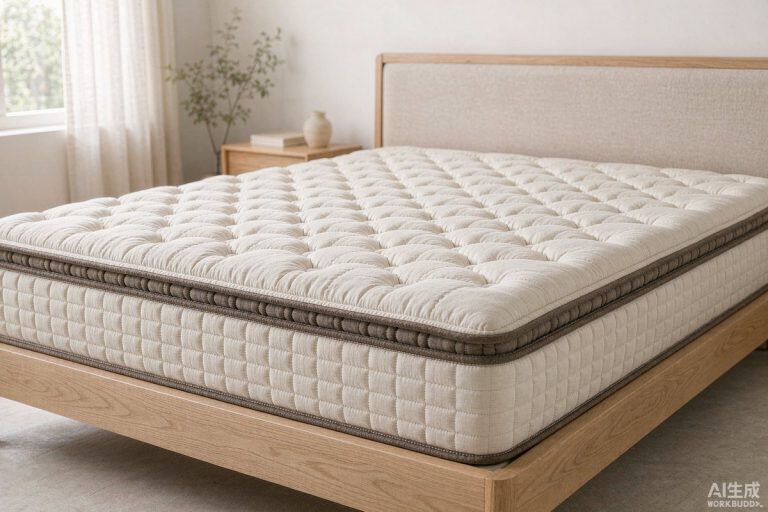
The mat slides under the mattress and measures through it — ballistocardiography for heart rate, plus respiration and movement. No wearable, nothing to charge, nothing to remember. For a couple, two mats give each person their own data, which is the only setup on this list that handles two sleepers properly.
It is less precise on stage detection than a ring or a watch, and it cannot measure blood oxygen meaningfully. But it captures the variable that matters most for most people: time in bed versus time asleep. If you want to know whether you are actually sleeping seven hours or lying awake for one of them, the mat answers that reliably.
Best if you want the bed to do something: Eight Sleep Pod 4
This is the only product here that closes the loop. It tracks, then actively changes surface temperature on each side of the bed through the night. For a couple where one person runs hot and the other cold, that is a real solution rather than a chart.
The cost is the problem. The Pod is priced like a mattress, requires a subscription for the features that justify it, and has a history of app and firmware issues that a $200 tracker does not. Buy it as a temperature-control system that happens to track, not as a sleep tracker.
The number to ignore
Every one of these apps will give you a “sleep score” out of 100. It is not a measurement. It is a weighted composite of the four or five metrics the company chose to weigh, using weights they do not publish, tuned so that a normal night scores in the 70s and a great night scores in the 80s.
The problem is not that it is inaccurate. It is that it is actionable-looking, so people start optimising the score instead of their sleep — going to bed earlier than they are sleepy, which increases time awake in bed, which lowers the score, which increases anxiety about sleep. There is a documented pattern of this in people with insomnia, sometimes called orthosomnia.
Track four raw numbers instead: time in bed, estimated time asleep, number of awakenings, and how consistent your sleep and wake times are across the week. The last one is the most predictive of how you feel, and almost nobody looks at it.
What to do with the data
Fix consistency first. A consistent wake time, seven days a week, does more for sleep quality than any other single change. Trackers make this visible, which is their main value.
Do not chase deep sleep minutes. Deep sleep is mostly determined by how long you have been awake and how much physical strain you have accumulated. You cannot add to it by trying, and the devices disagree with each other on how to measure it by 20–30%.
Look at trends, not nights. One bad night is noise. Fourteen days of declining sleep efficiency is a signal worth acting on — and worth taking to a clinician.
FAQ
Can a tracker tell me if I have sleep apnea? No. Some, like the Apple Watch and newer Oura models, offer screening features for breathing disturbances, but they are screening aids, not diagnoses. A home sleep apnea test or an in-lab study is the actual answer.
Is a ring or a watch more accurate? They are close on total sleep time and both weaker on stages. Pick by comfort and charging habit, not by accuracy claims — you will wear the comfortable one and the accurate one will sit in a drawer.
Do I need a subscription? For Oura, no — the core sleep data works without one. For Whoop and Eight Sleep, yes, the product does not function without it. Factor that into the price before you compare.
Will tracking my sleep make my insomnia worse? It can. If you find yourself checking the app during the night, or feeling anxious about the score before bed, stop looking at it for two weeks. The data will still be there.