“Blue Light Before Bed: What the Evidence Actually Says”
Blue Light Before Bed: What the Evidence Actually Says
The claim you’ve heard a hundred times: screens before bed destroy your sleep. The claim you’ve also heard: it’s overblown moral panic. Both camps cite studies. The actual answer is more useful than either, and it starts with separating two questions that get constantly confused: does evening light suppress melatonin, and does that suppression measurably change how you sleep?
Short version: the first is clearly true. The second is smaller, more individual, and more manageable than the panic suggests — and the biggest real-world effect isn’t melatonin at all. It’s what the screen does to your mind.
The mechanism is real
Light in the blue-green part of the spectrum (roughly 460–480 nm) hits intrinsically photosensitive retinal ganglion cells — a special class of cells in your eye that have nothing to do with vision. Their only job is telling your brain’s clock (the suprachiasmatic nucleus) how much ambient light there is.
The chain: evening light → signal to the clock → suppressed melatonin release → delayed sleep timing. This is not alternative physiology; it’s textbook circadian biology, measured thousands of times. In controlled lab conditions, evening screen light measurably delays melatonin onset and shifts sleep timing later. That part of the panic is grounded.
The honest question is what that does to a normal person on a normal night. And that’s where the effect size shrinks.
What the studies actually show
Three findings from the research literature matter more than any single headline:
1. The melatonin effect is real but modest for typical screen brightness. Lab studies use bright, close-range light under controlled conditions. When researchers tested more realistic evening use — normal room lighting plus a device at normal distance — melatonin suppression was smaller, and the downstream sleep effect was often within the noise. A 2022 review of blue-light-filtering interventions found that while evening light exposure does shift circadian timing, glasses and night-mode filters produced only small improvements in sleep outcomes.
2. Individual sensitivity varies enormously. Some people are measurably chronobiologically sensitive to evening light and see real sleep disruption; others shrug it off. Genetics plays a large role here — the same gene variants that make some people extreme morning or evening types also influence light sensitivity. If you’ve tried screen curfews and felt nothing, you may simply be on the insensitive end. That’s data, not weakness.
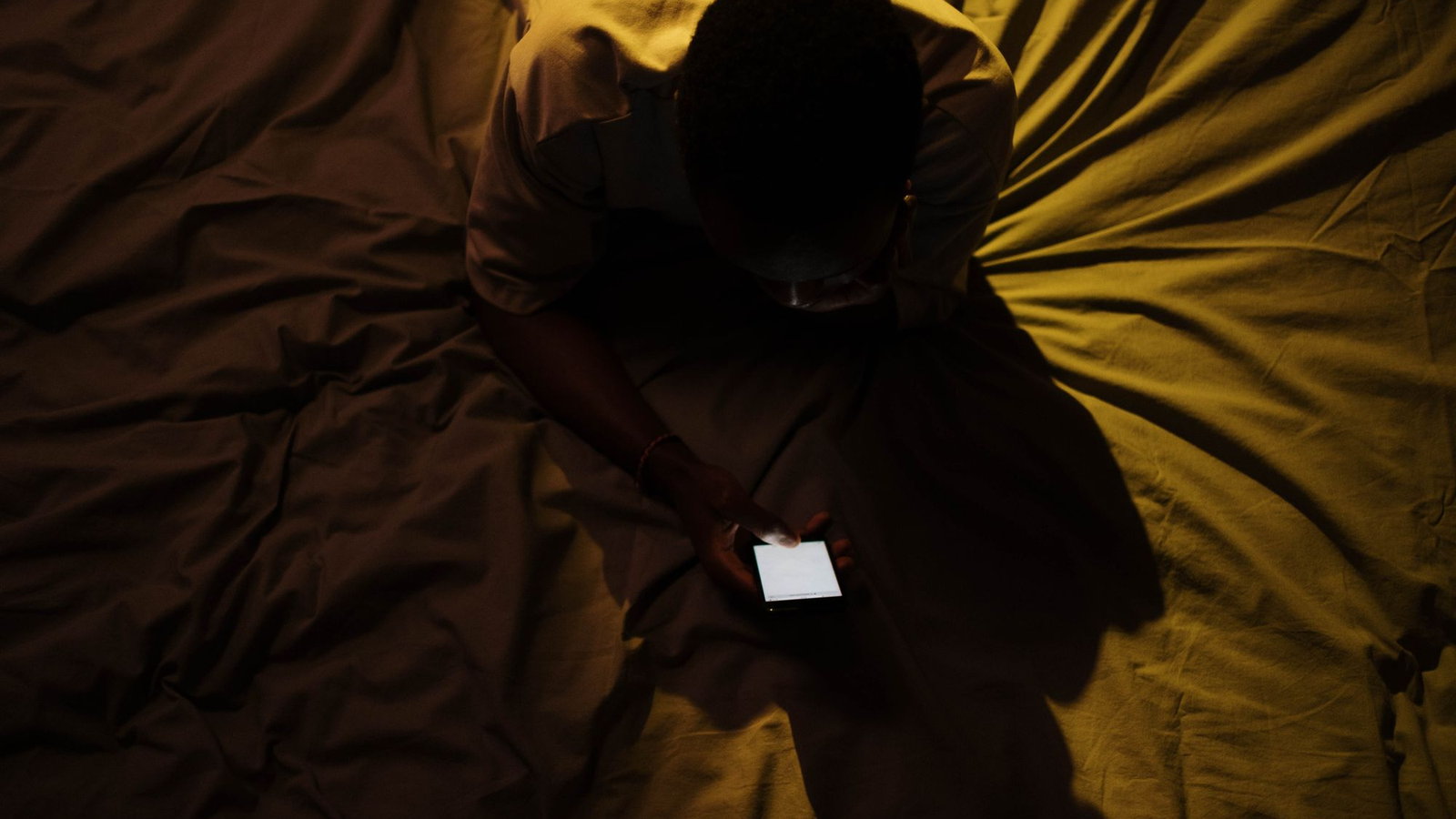
3. The bigger effect is cognitive, not photic. This is the finding that gets buried: what keeps people awake at 11pm is usually not the light from the screen but the content on it. Work email, argumentative group chats, doomscrolling, and competitive games produce arousal — the activating kind — which delays sleep far more reliably than 410nm wavelength shifts. Multiple studies comparing reading on a backlit e-reader versus a print book found that the e-reader delayed sleep, but subsequent work pinned much of the effect on engagement and alertness rather than blue light alone.
So the useful question is not “how do I filter blue light” but “what is this screen doing to my head.”
What actually works, in order of leverage
### 1. Dim the room, not just the screen
Your clock responds to total ambient light, and the most powerful evening light in most homes is the overhead lighting, not the phone. Dropping room brightness in the last hour before bed does more for melatonin than any app filter, because it addresses the dominant light source. Blackout curtains complete the job for the other half of the problem — keeping morning light out — which matters if you’re trying to shift later or sleep past dawn, as covered in our shift worker guide and the blackout curtain guide.
### 2. Use morning light deliberately
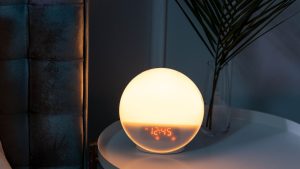
Here’s the asymmetry most people never hear about: morning light exposure is a far stronger circadian lever than evening light avoidance. Ten to twenty minutes of outdoor light shortly after waking advances your clock, consolidates your rhythm, and — crucially — makes you less sensitive to the small evening perturbations that follow. Fix the morning and the evening often takes care of itself. If outdoor light isn’t available (winter, night shifts), a light therapy lamp is the substitute with real evidence behind it.
### 3. Set a content curfew, not a screen curfew
If the arousal finding is right, then the highest-impact change is what you consume, not what you consume it on. A rule that works better than “no screens after 10”: nothing activating after 10 — no email, no news, no arguments, no games. Passive content (a show you’ve seen, music, a familiar book) is a different animal from interactive or emotionally loaded content, and your clock knows the difference even if the screen doesn’t.
### 4. If you want a filter, use the cheap ones deliberately
Night modes, blue-light glasses, and screen filters: the evidence says small effect, not zero. For light-sensitive people they’re worth having; for everyone else they’re a rounding error. Two caveats from the literature: filters that dim the screen substantially work better than barely-visible tint filters, and the biggest consistent benefit of night mode is that it dims the display — which you could do manually, for free.
The things that matter more than blue light
If you’re optimizing evening sleep and skipping these, you’re polishing the wrong thing:
- Caffeine timing — half-life of 5–6 hours means an afternoon coffee is still in your system at bedtime. Our caffeine cutoff calculator does the math; the mechanism is in how caffeine affects sleep.
- Room temperature — core body temperature has to drop for sleep to initiate; a warm room fights this directly, as the 65°F rule explains.
- Timing consistency — a stable bedtime anchors the clock more reliably than any light intervention. The total sleep requirement by age is the other non-negotiable.
- Alcohol — the single most common self-administered sleep saboteur, and it works through mechanisms light doesn’t touch. We cover it in alcohol and sleep.
How we assessed this
This article is built on the circadian and sleep literature on evening light exposure: controlled studies of melatonin suppression under realistic brightness conditions, trials of blue-light-filtering interventions (glasses, night modes, screen filters), and the arousal-versus-photic research comparing screen content types. Where the evidence is settled — evening light suppresses melatonin and shifts timing — we say so plainly; where it’s genuinely mixed — the size of the effect for typical device use, and the efficacy of consumer filters — we say that too.
We have not run our own laboratory measurements, and individual light sensitivity varies enough that the effect size you experience personally may differ substantially from the study averages. This is general health information, not medical advice.
FAQ
Do blue-light glasses actually work? The honest answer: a little, for some people. Trials show small improvements in sleep outcomes, with the largest effects in people who are already light-sensitive or who use very bright screens at close range. If you’ve bought a pair, they’re not snake oil — they’re just not the highest-leverage change available.
Is night mode on my phone useless, then? Not useless, just oversold. Its most reliable benefit is dimming the screen (which helps), and the color shift has a small real effect on melatonin. If it costs you nothing to leave on, leave it on. Just don’t expect it to rescue a 1am doomscroll.
What time should I stop looking at screens? The research supports a softer version of the usual advice: dim the room in your last hour, keep the content boring, and prioritize morning light. A hard “no screens after 9pm” rule is not supported by the effect sizes in the literature, and rules people abandon are worth less than habits they keep.
Why does morning light matter more than evening darkness? Because the clock’s phase-shifting response to light is strongest in the biological morning — that’s when light most effectively anchors the whole rhythm. Evening light avoidance is a weak lever compared to morning light exposure, which is why the advice is usually given backwards.
I feel wide awake after reading in bed. Is that the blue light? Probably the reading. Engaging, interesting, or activating content — including a great novel — produces arousal that delays sleep onset regardless of screen or page. If you want bedtime reading to work, pick the book you’ve already read three times, not the thriller.