Best Water Filters for PFAS in 2026
PFAS removal is the clearest case in this whole site where the label and the certification say different things. A filter box can print “reduces PFAS” with no certification at all, and a shopper has no way to tell that claim from a tested one.
The good news is that the certification exists, is searchable, and narrows the market to a manageable list. The bad news is that it is specified per contaminant, so a filter certified for chlorine taste, lead and PFOA may still pass PFOS through, or may not be certified for the shorter-chain compounds at all.
What certification actually means
| Standard | What it covers | Relevance to PFAS |
|---|---|---|
| NSF/ANSI 42 | Aesthetic: taste, odour, chlorine, particulates | Not a health claim; does not cover PFAS |
| NSF/ANSI 53 | Health effects: lead, cysts, VOCs, PFOA/PFOS | The one to look for on a PFAS claim |
| NSF/ANSI 58 | Reverse osmosis systems | Covers PFAS reduction for RO units |
| NSF/ANSI 401 | Emerging contaminants: some pharmaceuticals, BPA | Adjacent, not a PFAS certification |
| NSF P473 | PFOA and PFOS specifically | Older protocol; now folded into 53 updates |
The practical rule: if a product claims PFAS reduction and does not list NSF/ANSI 53 or 58 certification with the specific compounds named, treat the claim as unverified. That applies to several well-known pitcher brands, including at least one that built its marketing on purity claims.
The uncomfortable case study
Berkey-style gravity stainless filters were sold for years on claims of removing almost everything, including PFAS, without NSF certification. In 2023 the US EPA took action over unregistered pesticide-device claims, and the company’s own testing claims became the subject of litigation. The lesson is not that the product is worthless — it is that “lab results on our website” is not the same as third-party certification against a published standard, and this category is full of it.
What works, by technology
Reverse osmosis removes PFAS reliably, along with most other dissolved contaminants. It also removes minerals, wastes water (typically 2–4 gallons per gallon produced), and is slow. Under-sink RO with a tank is the strongest general answer if you want one system that removes the widest range.
Activated carbon block adsorbs longer-chain PFAS well and shorter-chain compounds poorly. A high-quality block certified to NSF/ANSI 53 for PFOA/PFOS is a reasonable middle option, cheaper and faster than RO, with no wastewater.
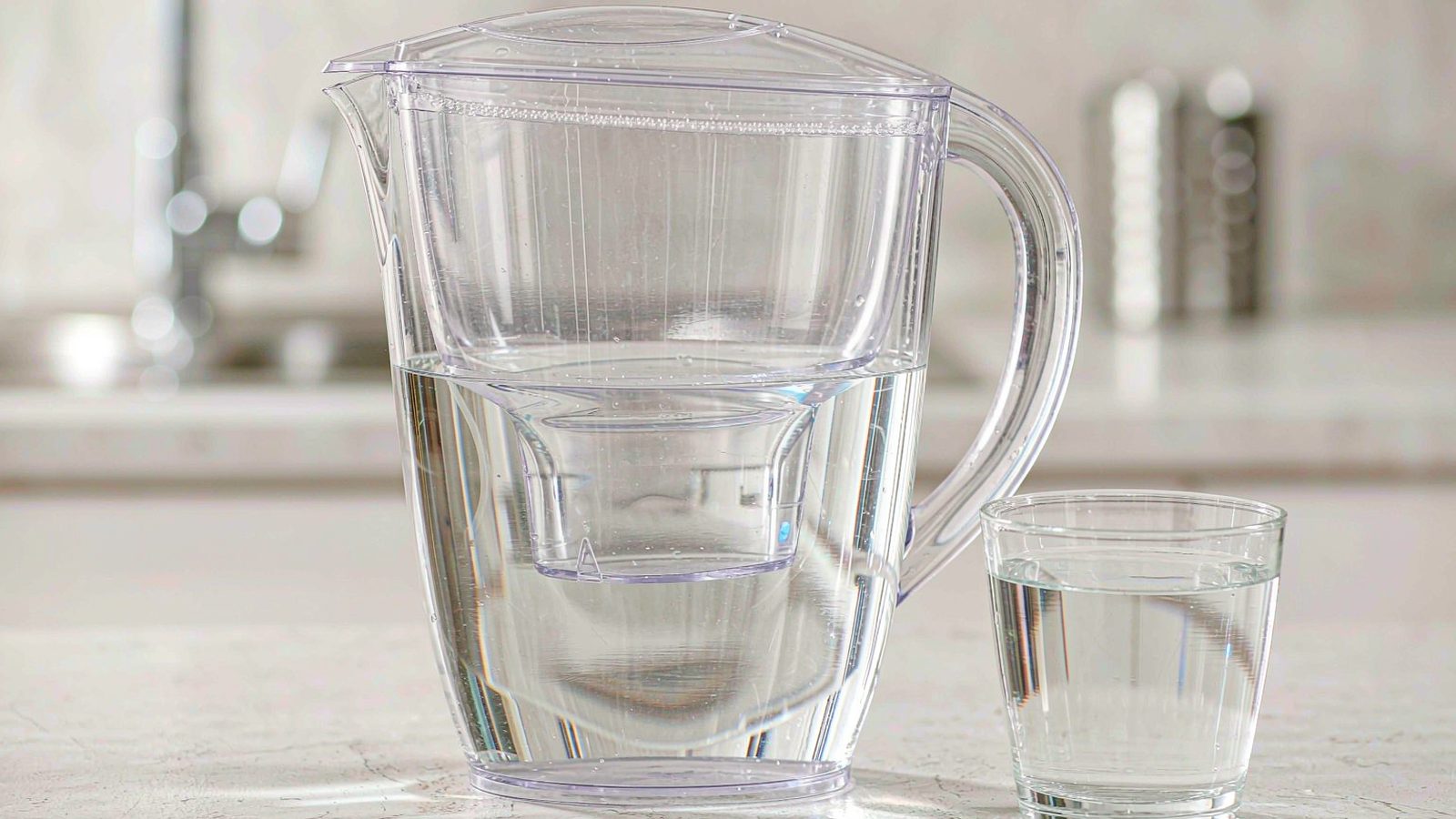
Granular activated carbon in a pitcher has limited contact time and limited capacity. Most pitchers are certified for taste and chlorine only. A few are certified for PFAS; the list is short and worth checking rather than assuming.
Ion exchange is used in whole-house systems and works, but the resin needs regeneration or replacement and the systems are expensive.
The picks
| System | Type | Certification | Best for |
|---|---|---|---|
| AquaTru Carafe | Under-sink / counter RO | NSF/ANSI 58, 53, 42, 401 | Renting, or no plumbing work |
| Waterdrop G3P800 | Under-sink RO | NSF/ANSI 58, 372 | Permanent install, low wastewater |
| Clearly Filtered pitcher | Carbon block pitcher | NSF/ANSI 42, 53 (specific claims) | Small households, low volume |
| iSpring RCC7AK | Under-sink RO | NSF/ANSI 58 | Budget RO with remineralisation |
| Aquasana OptimH2O | Under-sink carbon + RO | NSF/ANSI 42, 53, 58, 401 | People who want both technologies |
AquaTru Carafe is the easiest recommendation for renters. It is a countertop RO unit that needs no plumbing, is certified to the standards that matter, and produces about three quarts per cycle. The trade-off is noise, speed, and filter cost over time.
Waterdrop G3P800 is a tankless under-sink RO with a low wastewater ratio and a fast flow rate. It requires a permanent install and a power outlet under the sink, which rules it out for some kitchens.
Clearly Filtered is one of the few pitchers that publishes certification for the compounds it claims. Capacity is low and the filters are expensive per gallon, which is the honest cost of doing this in pitcher form.
iSpring RCC7AK is the value RO option: five stages, a remineralisation stage so the water does not taste flat, and a price well under the premium brands. It is bulky and the install is a weekend job.
Aquasana OptimH2O combines carbon block and RO, which covers both the long-chain and short-chain compounds reasonably and keeps flow rate usable. It is the most expensive of the under-sink options here.
What to check before buying anything
1. The exact certification number, searchable in NSF’s listing database 2. The compounds named — PFOA, PFOS, and ideally the shorter-chain ones (PFBS, PFHxS) 3. The certified capacity in gallons or litres, which determines the real cost per gallon 4. Filter replacement cost and availability — a system with discontinued filters is a paperweight 5. Whether the claim is for the whole system or one cartridge in it
A note on testing your own water
If you are on a private well, or in an area with a known contamination plume, test first. A certified lab test for PFAS costs real money (typically 200–400 dollars) and tells you which compounds are present and at what level, which determines whether you need RO or whether a carbon block is adequate. Filtering blind is how people spend 800 dollars to solve a problem they may not have.
Public water systems in the US publish PFAS results under EPA monitoring rules, and many utilities post them. Check your utility’s report before buying anything.
How this list was built
Selection is based on published NSF certification listings, certified capacity, filter cost per gallon, and aggregated owner reports on leak and fitting reliability. We have not run independent laboratory testing on these systems, and we do not claim to. This is not medical advice about your water supply — see our medical disclaimer and, for a contamination concern, your local health authority.
FAQ
Do fridge pitchers remove PFAS?
Most do not. They are typically certified for taste and chlorine. Check the specific model’s certification before assuming.
Is boiling water enough?
No. Boiling concentrates PFAS by evaporating water, which makes the concentration slightly worse.
How often do RO membranes need replacing?
Pre-filters every 6–12 months, the membrane every 2–3 years, depending on water quality and volume. Budget for it — the consumable cost is where cheap systems stop being cheap.
Should I buy a whole-house system?
Only if you have a confirmed contamination problem and a specific reason to treat all water rather than drinking water. They cost several thousand dollars and need maintenance.