Best Sleep Headphones and Sleep Masks (2026): Wearing Sound to Bed Without Wrecking Your Ears
Sleeping with sound is common and mostly benign. Sleeping with speakers pressed against your ears for eight hours is not the same thing, and the difference is worth understanding before buying anything that plays audio into your ear canal overnight.
The four product types
Headband style. A soft fabric band with flat speakers over the ears. Comfortable for side and back sleepers, washable in most designs, and the speakers sit outside the ear canal. The most popular category for good reason.
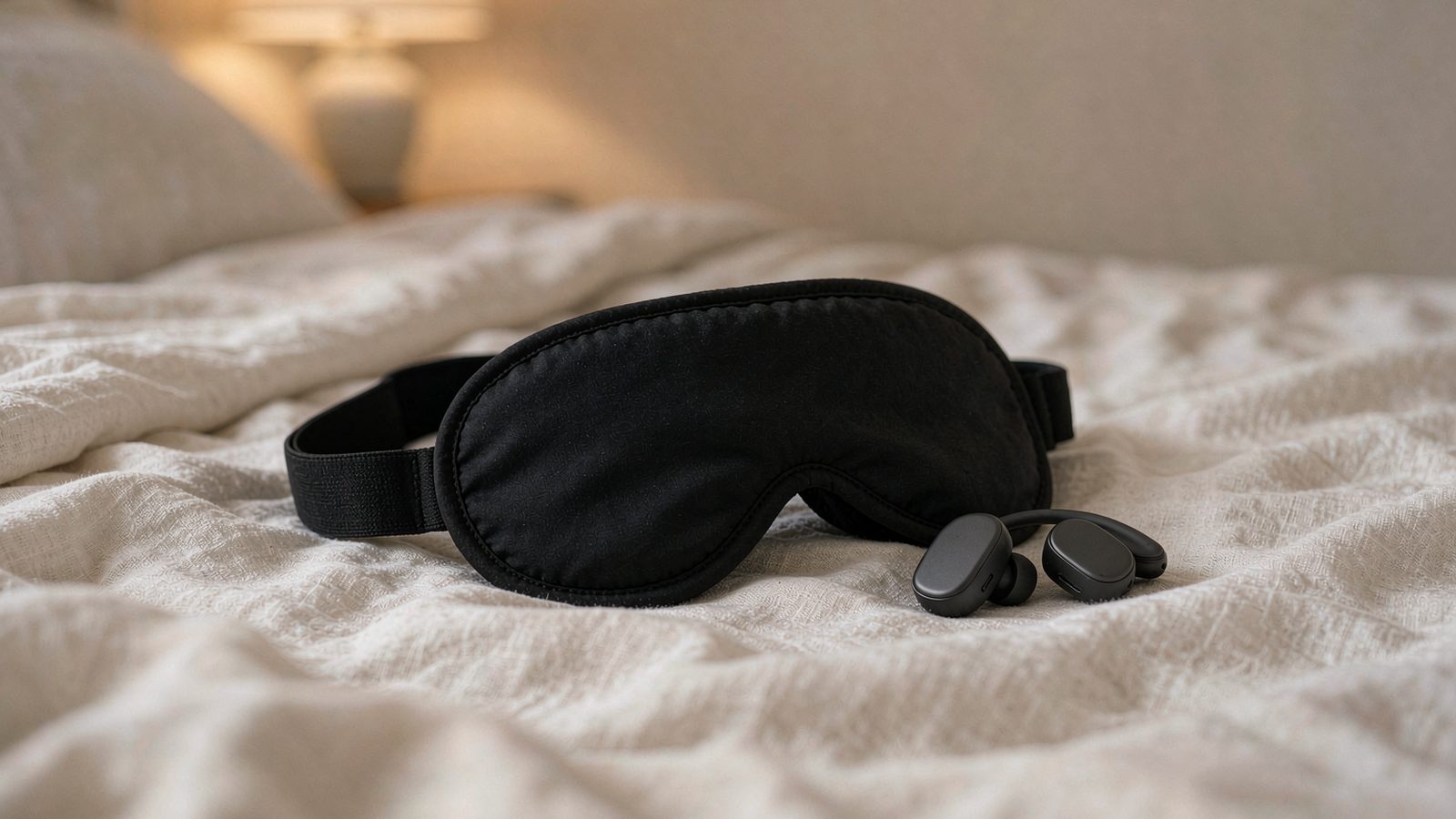
Audio sleep mask. A contoured mask with flat speakers built in. Blocks light and plays sound. The advantage is the combination; the drawback is that the speakers sit against the eyelid area if the mask shifts, and the electronics make it less washable.
Pillow speaker. A flat speaker that slides under the pillow. Nothing is worn, which solves every comfort and hygiene objection. The sound is at a lower level and the partner hears more of it.
Sleep buds. Small earbuds designed for sleeping, sitting in the ear canal. The best sound quality and the worst hygiene and safety profile: an object in the canal for eight hours traps moisture and wax, and the volume can be higher than you think.
The hearing rule that matters
The risk is not “sleeping with headphones”. It is dose: sound level multiplied by duration. Occupational guidance uses 80 dB for eight hours as a limit for workplace exposure; for personal listening, the practical recommendation is to keep volume below about 60 percent of maximum for long sessions.
Sleep is the worst case for dose, because it is the longest session most people ever do. That gives three rules:
- Set the volume before you lie down, at a level where you can still hear a smoke alarm. If you cannot, it is too loud.
- Use a sleep timer so audio stops after 30 to 60 minutes rather than playing for eight hours. Almost every app and device has one.
- Avoid canal-sealing buds for nightly use if you are prone to ear infections or wax build-up.
There is also an honest uncertainty: the evidence that audio at safe levels disrupts sleep architecture is mixed, and white noise appears to help some people fall asleep and slightly fragment sleep in others. If you wake feeling unrested after months of sleeping with audio, test a week without it.
What to check in a headband or mask
| Feature | What to look for | Why |
|---|---|---|
| Speaker position | Flat, thin, movable within the band | Thick speakers make side sleeping painful |
| Band width | Wide enough not to rotate at night | A rotating band puts the speaker on your temple |
| Battery life | At least 8 hours, or a sleep timer | A dead battery mid-night is worse than no audio |
| Charging | Magnetic or USB-C, with a covered port | Exposed ports corrode from sweat |
| Washability | Removable electronics, machine-washable band | Anything against your face nightly needs washing |
| Bluetooth | Standard, with a reliable reconnect | These reconnect worse than earbuds and it matters at bedtime |
| Light blocking (masks) | Contoured eye cups, adjustable strap | Flat masks press on the eyes |
Side sleeping is the deciding constraint
If you sleep on your side, a speaker against your ear meets the pillow. Two designs work: speakers thin enough to be imperceptible (a few millimetres), and a design that moves the speaker slightly forward of the ear canal so pillow pressure lands on the band, not the speaker.
An audio mask is generally worse for side sleepers than a headband, because the mask has to seal against the face and the speaker stack adds thickness at the temple.
When a speaker in the room is the better answer
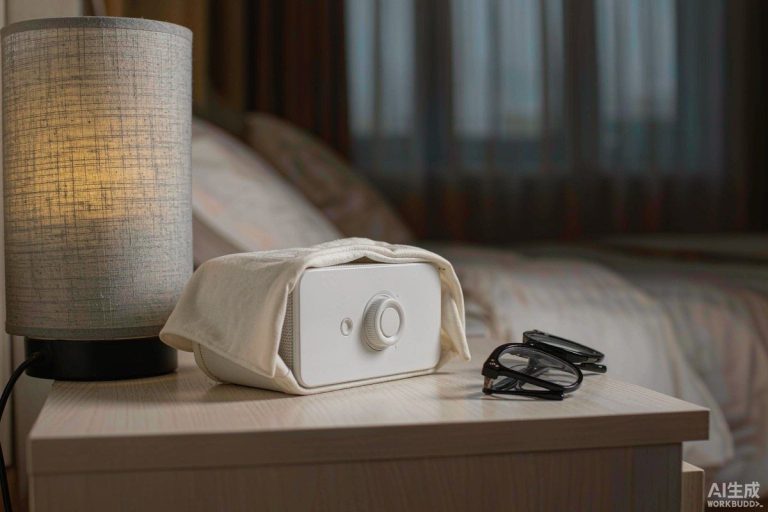
For most people with a noise problem, a white noise machine or a phone speaker on the nightstand solves it without wearing anything:
- No device against the head
- Nothing to charge
- No hygiene issue
- Nothing to lose in the bed
- The partner shares the masking benefit
The trade-off is that you cannot play a podcast without disturbing your partner, and the sound is less controlled at your ear. For masking traffic, a fan, or a snorer, room-level sound usually wins. Our white noise machine guide covers volume, frequency, and placement.
If the problem is a partner’s snoring, treating it at the source is better than masking it — our guide to why a partner’s snoring wakes you covers what actually reduces snoring.
Content that helps and content that does not
What people play matters as much as the device.
Helps: steady broadband sound (white, pink, brown noise), rain, fan, and audio engineered for sleep. Also useful: a spoken sleep story at low volume, which occupies attention without demanding it.
Does not help: podcasts with variable volume, anything with sudden loud segments, music you like enough to follow, and anything with advertisements — an ad break at 2 a.m. is a guaranteed wake-up.
Neutral: binaural beats and “sleep frequencies”. The evidence is weak and inconsistent, and they are not harmful at safe volume.
FAQ
Are sleep headphones safe? At low volume with a timer, yes for most people. The risks are volume dose over long durations, ear canal hygiene with buds, and cord entanglement — choose cordless.
Headband or mask? Headband for side sleepers and for anyone who does not need light blocking. Mask if light is the bigger problem.
Can I wear them with earplugs? Yes, and the combination is common: the plug attenuates, the headband masks. Keep the headband volume low.
Do they work for tinnitus? Some people find masking relief. New, one-sided, or worsening tinnitus needs assessment, not a product. See our medical disclaimer.
What about kids? Audio at low volume with a timer is generally fine; avoid anything with a cord in a child’s bed. For younger children, a room speaker is the safer choice.